


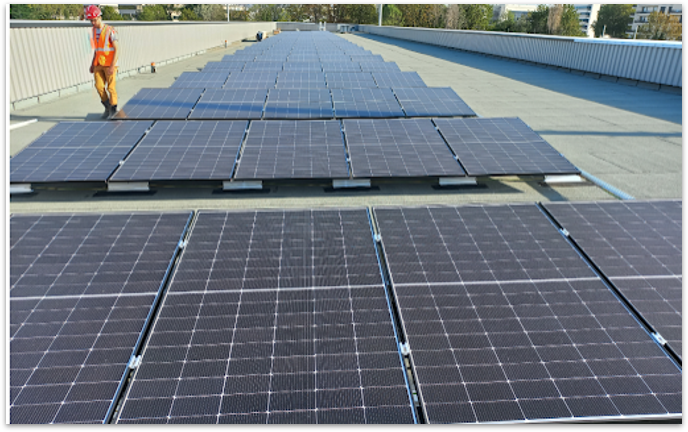

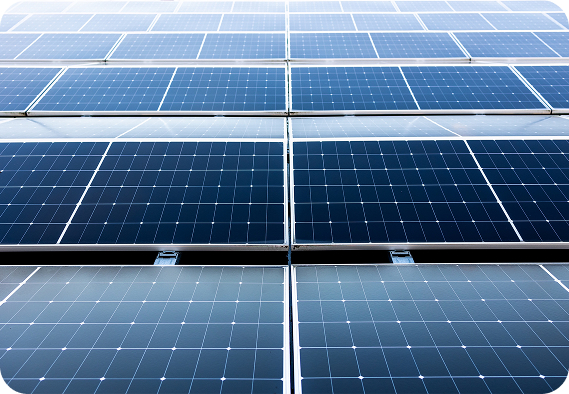

Benefits for rootops
Maximize Unused Space
Reduce Energy Costs
Enhance Energy Independence
Meet Regulatory Compliance
Strengthen Sustainability Profile
Increase Property Value & Improve Energy Resilience


Types of roofs

Concrete flat roof
- Maximum slope of 5%
- Elastomeric double-layer waterproofing
- Minimum class C insulation, F5f5T3 classification minimum

Sealed steel deck roof TAN type
- Maximum slope of 10%
- Bitumen or synthetic waterproofing

Dry steel deck roof
- Maximum slope of 25%
- Minimum deck thickness: 0.75mm

Non-asbestos fiber cement roof
- Maximum slope of 25%

Directly Consume the Energy You Produce
The principle of solar self-consumption allows you to use the electricity generated by your photovoltaic system on-site. While this energy may not cover all your building’s needs, our solutions optimize distribution between your consumption, neighboring sites, and the grid.
When your system produces excess energy, it’s automatically fed into the grid, earning you advantageous compensation for each kWh sold.